Higher product R-value
135mm
135mm Aerolite insulation
For projects specifying the 135mm roll. Check the complete roof and ceiling requirement before choosing.
- Coverage per roll
- 6 m²
- Product R-value
- 3.38 m²·K/W
- Unrolled dimensions
- 5 m × 1.2 m
The Aerolite learning & product hub
Learn how to install Aerolite insulation, understand the different roll thicknesses and work out what to buy. Practical guidance for homeowners, DIY projects and the trade.
Installation information & product supply. No installation bookings through this website.
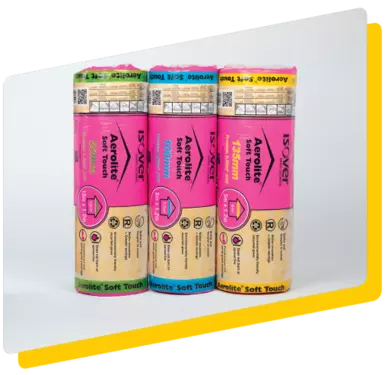
Useful knowledge. Clear product choices.
Aerolite Installers helps you connect the practical questions: where the insulation goes, which thickness your project needs and how many rolls to order. Start with the guidance, then explore the product details in our shop.
Whether you plan to do suitable work yourself or appoint independent Aerolite installers, use the same starting point: a checked roof space, a clear specification and measured ceiling areas. Arrange installation separately with your chosen contractor.
Learn the method
This Aerolite Installers overview explains the sequence for ceiling-level insulation. Read the current manufacturer’s instructions before starting; the roof structure, services and specified build-up determine the details.
Position illustrated schematically. This is not a construction detail or a walking surface.
Watch Isover’s installation tutorialManufacturer’s video · opens on YouTubeCheck access, leaks, ceiling condition and existing insulation. Identify electrical fittings and other services before work starts. Resolve defects first and use a competent contractor where safe access or the condition is uncertain.
Measure each ceiling section and record its area. Use the horizontal ceiling footprint for ceiling-level insulation. Keep a separate measurement of the spaces between trusses for cutting the blanket.
Choose the specified thickness and product R-value before ordering. Your location, roof construction and existing layers matter. A thinner roll covering more area is not a substitute for the required thermal performance.
Isover describes cutting the packaged roll to fit between trusses, then unrolling it above the ceiling. Follow its current fitting instructions and allow the blanket to recover without compressing it.
Maintain the clearances required by light fittings, flues and other equipment. Keep necessary ventilation and access routes clear. Have a qualified electrician assess electrical concerns; do not move wiring as part of a DIY insulation job.
Check for missed sections, gaps and compressed areas. Keep packaging details and project photographs for your records. Store any unused rolls dry and protected until they are needed.
Reference: Isover Aerolite Soft Touch technical data and installation instructions ↗
Choose with the specification in mind
Compare coverage and thermal resistance, then open the product for current pricing and ordering. Aerolite Installers keeps the buying information close to the practical guidance.
For projects specifying the 135mm roll. Check the complete roof and ceiling requirement before choosing.
For applications where 100mm is specified. Confirm suitability instead of choosing by roll price alone.
Consider for an assessed top-up to existing insulation. It is not a universal replacement for a thicker layer.
Product R-value describes the insulation itself, not the total roof assembly. See Isover’s published product data and confirm the required build-up for your project.
Plan your purchase
Use the Aerolite Installers calculator to estimate whole rolls. Enter the area you intend to insulate, choose the thickness and add a cutting allowance if your layout needs one.
Ceiling area ÷ roll coverage = rolls.
Round up to a whole roll. For example, 120 m² using 135mm rolls needs 20 rolls before allowance, or 21 with 5%. This estimates material quantity, not installation cost or compliance.
If someone else is doing the work
If you appoint independent Aerolite installers, agree the job in writing before buying materials. A useful quotation explains the product, thickness, measured area and what the contractor will actually do.
Aerolite Installers provides information and product supply through this website. Contractor selection, site assessment and installation arrangements remain between you and your chosen installer.
Keep a simple area schedule. Aerolite installers and homeowners can use the same measurements to discuss quantities and spot missing sections before ordering.
Product prices in the shop relate to materials. Ask separately about delivery and arrange any fitting work directly with your chosen contractor.
Existing insulation needs assessment before a top-up. Aerolite installers should consider the condition and performance of the complete ceiling build-up.
Before you get started
The Aerolite Installers guide brings product selection and installation planning together. For a question about buying rolls, send us the area, thickness and delivery location.
Ask a product question ↗No. This website focuses on installation tutorials, product information and Aerolite roll sales. We do not book installation teams through this site. Arrange fitting separately with an independent contractor.
Some projects may be suitable for a capable DIY installer with safe access and the right equipment. Roof-space risks, electrical services and the specification must be assessed first. If these are uncertain, use a competent contractor.
Choose by the required thermal performance and the roof and ceiling build-up. The 135mm, 100mm and 50mm rolls have different product R-values. Coverage per roll alone does not determine suitability.
Isover identifies 50mm for suitable top-up applications. Check the existing material, its condition and the required overall performance before adding another layer. A top-up should follow a clear specification.
Compare the same thickness and specification first. Divide the current roll price by its coverage to find the material cost per square metre, then account for whole-roll quantities and delivery. The product pages show current pricing.
No. Glasswool can contribute to sound absorption, but sound control depends on the complete ceiling or wall system, including gaps, boards and other transmission paths. Do not treat a roll of insulation as a complete soundproofing system.
Use Aerolite Installers to plan your next step, compare the range and buy the insulation your project calls for.